Certification Protocols That Safeguard Fair Play in Real-Time Dealer Interactions and Automated Reel Systems
Devon Sullivan · Aug 19, 2026
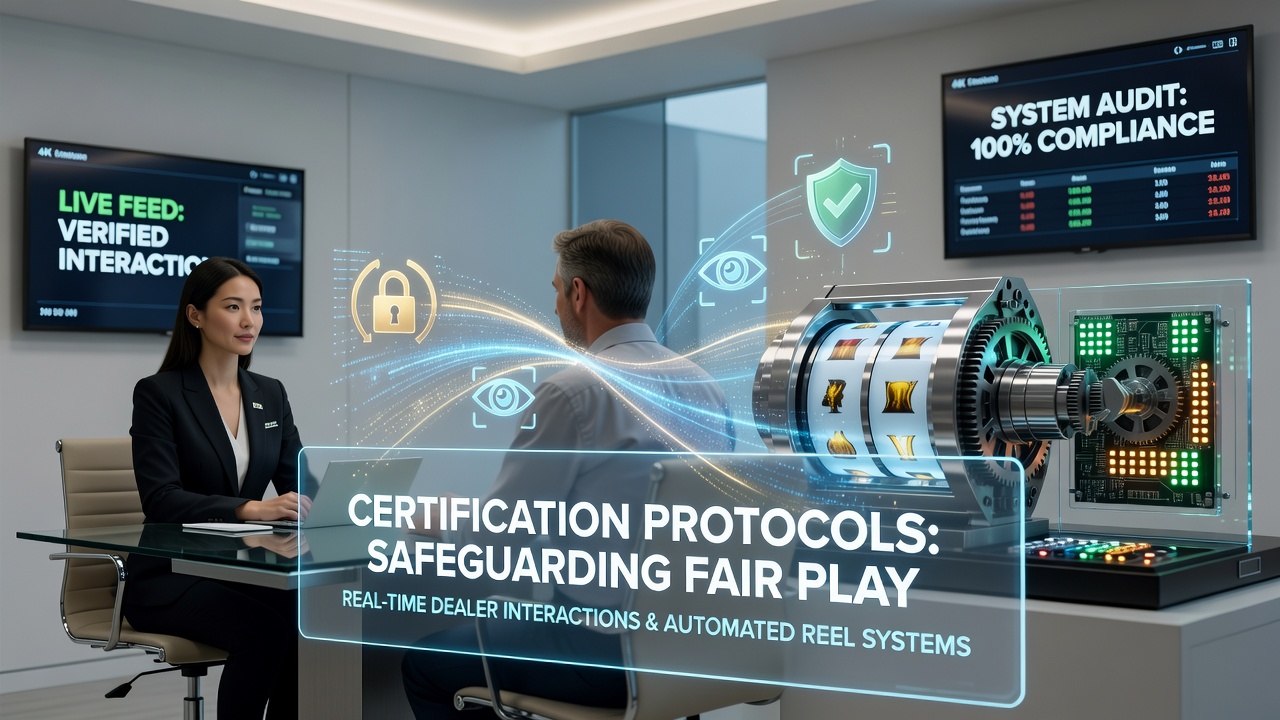
Certification Protocols That Safeguard Fair Play in Real-Time Dealer Interactions and Automated Reel Systems
Certification protocols form the backbone of fair play verification across live dealer tables and automated reel systems, where independent laboratories evaluate hardware, software, and operational procedures before any platform receives approval for public use. These evaluations cover random number generators, card shuffling mechanisms, and dealer conduct standards, all measured against technical criteria that regulators in multiple jurisdictions enforce.
Core Elements of Real-Time Dealer Certification
Real-time dealer interactions require ongoing monitoring systems that record every card dealt, every wheel spin, and every player action, while certification bodies test the integrity of video feeds, data transmission, and anti-collusion measures. Laboratories examine whether encrypted streams prevent tampering and whether software flags suspicious patterns such as repeated high-value wins that deviate from expected probabilities. Observers note that these checks extend beyond initial approval because operators must submit periodic audit reports showing continued compliance.
Standards Applied to Automated Reel Systems
Automated reel systems undergo separate scrutiny focused on random number generator performance, payout percentage calculations, and mechanical or digital reel mapping accuracy. Testing includes millions of simulated spins to confirm that outcomes remain unpredictable and match advertised return-to-player figures. Data shows that certified systems maintain statistical consistency within defined tolerance levels, and regulators require re-certification after any software update or hardware change.
Independent Testing Laboratories and Their Role
Accredited laboratories such as those recognized by the Alcohol and Gaming Commission of Ontario conduct standardized evaluations that include source code review, hardware inspection, and live operational trials. These organizations apply uniform test scripts across different game types, which allows regulators in various regions to compare results and accept certifications issued under equivalent standards. One study revealed that laboratories typically require between four and twelve weeks to complete full certification depending on system complexity.
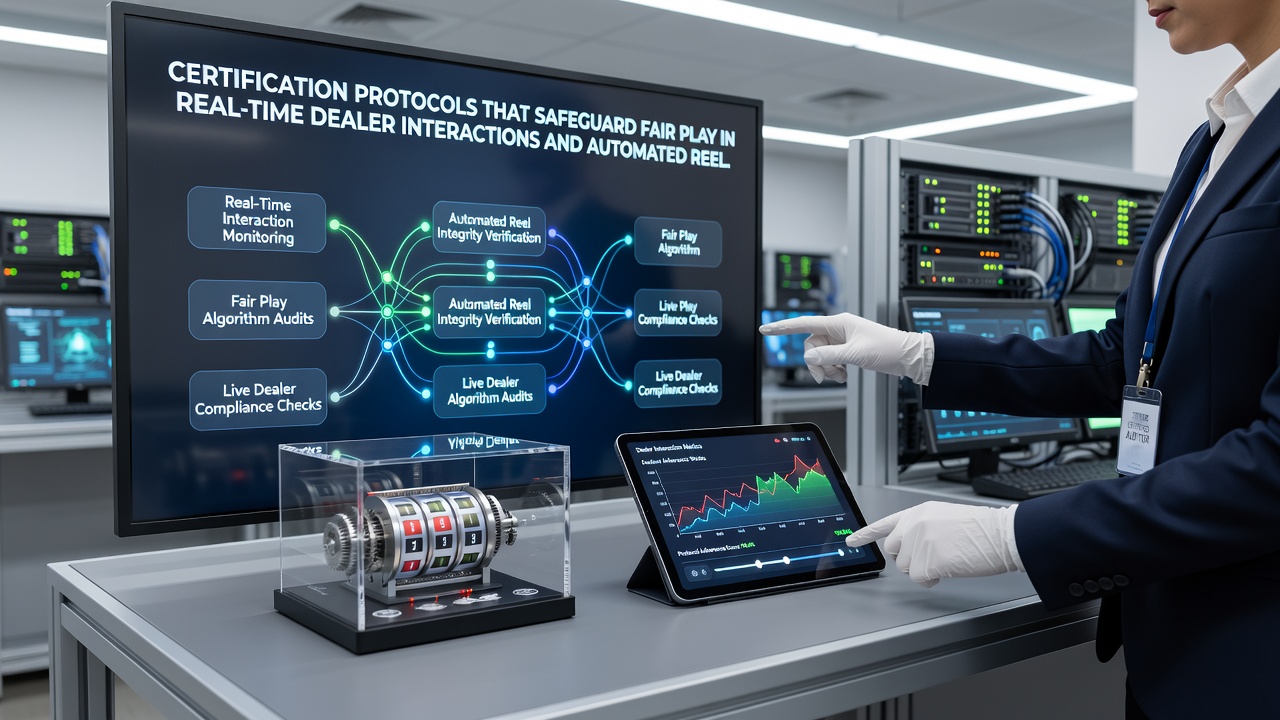
Regulatory Updates Scheduled for August 2026
Authorities in several jurisdictions have announced enhanced requirements that take effect in August 2026, including mandatory integration of real-time anomaly detection algorithms and expanded data retention periods for audit trails. These changes target both live dealer platforms and automated reel machines, requiring operators to demonstrate that their monitoring tools can identify potential manipulation within defined timeframes. The Alcohol and Gaming Commission of Ontario has published guidance outlining how existing certified systems must be re-evaluated under the new criteria.
Verification Processes in Practice
Verification begins with submission of technical documentation followed by controlled testing environments where engineers simulate player interactions and measure output against theoretical models. When discrepancies appear, developers must adjust code or hardware and resubmit for retesting. This iterative approach continues until the system meets all applicable benchmarks, after which a certificate is issued with an expiration date that triggers subsequent renewal audits.
International Alignment and Cross-Border Recognition
Many certification frameworks now incorporate mutual recognition agreements, allowing a certificate issued under one regulatory regime to support applications in another jurisdiction provided the underlying standards align. Researchers have documented how this approach reduces duplication while maintaining oversight, particularly when laboratories hold accreditation from multiple gaming authorities. What's interesting is that alignment efforts continue to evolve as new technologies such as blockchain-based audit logs enter the testing pipeline.
Conclusion
Certification protocols continue to adapt as real-time dealer environments and automated reel systems incorporate advanced technologies, with laboratories and regulators maintaining parallel focus on both initial approval and ongoing compliance verification. The structured processes described above ensure that fairness metrics remain measurable and enforceable across different markets and game formats.