Decoding Regional Policy Effects on Loyalty Point Systems When Players Alternate Between Live Dealer Blackjack Tables and Automated Reel Games in Multi-State Platforms
Ben Russell · Aug 26, 2026
Decoding Regional Policy Effects on Loyalty Point Systems When Players Alternate Between Live Dealer Blackjack Tables and Automated Reel Games in Multi-State Platforms
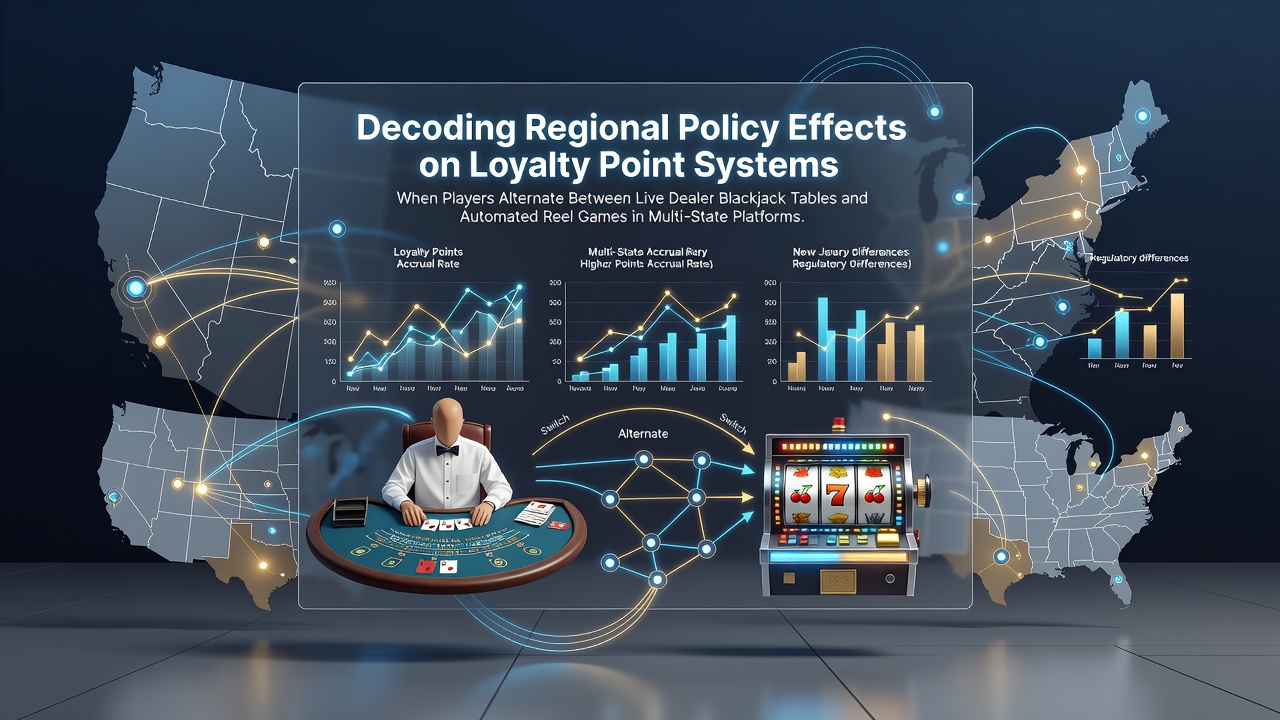
Regional policies shape how loyalty point systems calculate rewards when participants move between live dealer blackjack tables and automated reel games across platforms licensed in multiple states, and these rules create distinct accumulation rates depending on the jurisdiction where each session occurs. Data from state regulatory filings show that point multipliers often differ because live table games carry higher house edge oversight requirements in certain regions while automated reel formats fall under separate payout verification standards.
Policy Frameworks Governing Point Allocation
States maintain separate licensing structures that dictate whether points earned on live dealer tables can transfer directly to reel game balances or must reset upon format change, and observers note that this stems from varying tax reporting obligations tied to each game category. In platforms operating across several jurisdictions, operators must reconcile these differences through backend systems that flag location data at the start of every session, which means a player completing a blackjack hand in one state and then spinning reels in another encounters immediate adjustments to the earning formula. Figures from multi-state compliance reports reveal that such transitions trigger recalculations based on the stricter of the two regional guidelines whenever the platform detects a cross-border shift.
August 2026 marks the scheduled implementation of updated data-sharing protocols among several eastern states, requiring platforms to log point transactions with greater granularity so regulators can audit accumulation patterns in real time. This development builds on existing requirements that already separate live dealer activity from automated play for tax purposes, and it forces operators to maintain parallel ledgers that reflect each state's contribution rules without merging totals until the player exits the platform entirely.
Live Dealer Blackjack Versus Automated Reel Calculations
Live dealer blackjack sessions typically generate points at rates tied to average bet size and time spent at the table because regulators classify these games as skill-influenced, whereas automated reel games award points based on total coin-in volume with fixed percentages that remain constant regardless of session length. When a participant alternates between the two formats, the platform applies the live table rate only to hands played under that license and switches to the reel rate for spins completed under the automated license, creating segmented point ledgers that users must track separately. Research conducted by university gaming studies programs indicates that this segmentation reduces overall accumulation speed by an average of 12 to 18 percent compared with staying within a single game type for the entire session.

One documented case involved a platform serving both Pennsylvania and New Jersey markets where players who began with live blackjack and then switched to reels saw their pending points adjusted downward to match the lower multiplier mandated by the second state's rules. The adjustment occurred automatically at the moment of format change, and subsequent audits confirmed that the system complied with each jurisdiction's distinct contribution formulas without allowing carryover of the higher rate.
Cross-Border Platform Compliance Mechanisms
Multi-state operators rely on geolocation verification combined with game-type tagging to enforce regional policy differences, and these mechanisms ensure that point systems never apply a single uniform rate across all activity. According to records maintained by the New Jersey Division of Gaming Enforcement, platforms must submit quarterly reports that break down point issuance by both location and game category, allowing regulators to verify that no unauthorized blending of rates has occurred. Similar reporting structures exist in other jurisdictions, which means operators develop unified dashboards capable of displaying segmented totals while still presenting a single user-facing balance that reflects the lowest common compliance standard.
Industry associations such as the Nevada Gaming Control Board have published guidance documents outlining acceptable methods for reconciling these segmented ledgers when players travel between licensed markets. The guidance emphasizes that points remain non-transferable across state lines until the player completes a full cash-out process, at which point the platform applies final tax withholdings based on the cumulative activity recorded under each license.
Conclusion
Regional policy effects on loyalty point systems become most visible precisely when players alternate between live dealer blackjack tables and automated reel games on multi-state platforms, because each transition activates a new set of calculation rules tied to the active jurisdiction. Compliance systems track these shifts through location and game-type data, producing segmented point records that reflect the distinct regulatory demands of every state involved. As August 2026 approaches, upcoming data-sharing requirements will add another layer of granularity to these records, reinforcing the need for platforms to maintain precise separation between live table and automated reel contributions throughout every session.