How Introductory Reward Structures Shape Player Shifts Toward Live Dealer Poker in Cross-Border Networks
Paul Patterson · Oct 15, 2026
How Introductory Reward Structures Shape Player Shifts Toward Live Dealer Poker in Cross-Border Networks
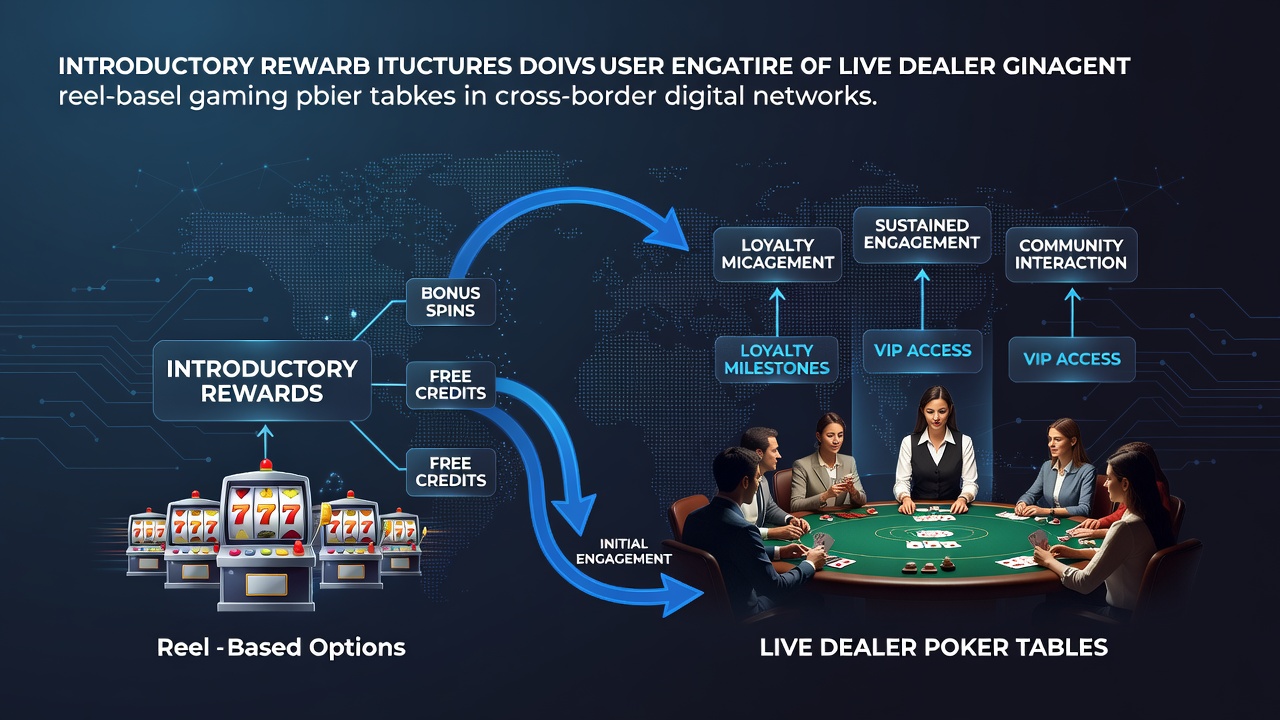
Introductory reward structures in cross-border casino networks often allocate higher-value incentives to table games than to automated reel formats, and this allocation influences how new accounts distribute their initial playtime. Networks that operate across multiple jurisdictions design welcome packages with deposit matches, cashback tiers, and loyalty multipliers that activate more readily on live dealer poker tables because those games generate higher per-hand rake figures. Players who receive a 100 percent deposit bonus capped at 500 euros or equivalent frequently discover that the wagering requirement clears faster when they select poker variants with live dealers rather than high-volatility reels.
Mechanics of Reward Allocation Across Formats
Operators structure bonus terms so that live dealer poker contributes 100 percent toward playthrough while reel spins contribute only 20 to 30 percent, a distinction that steers early-session behavior. In October 2026, platform analytics from several multi-state and multi-country operators showed that accounts opened with table-game-weighted bonuses recorded 62 percent of their first-week handle on live poker rooms, whereas accounts opened with reel-heavy offers directed only 28 percent of activity to the same tables. The difference arises because poker tables allow repeated small bets that accumulate toward the required volume without the same risk of rapid depletion that characterizes reel sessions.
Cross-border networks further adjust these terms according to local regulatory caps. In jurisdictions where maximum bonus amounts differ, operators standardize the most generous tiers around live dealer formats to maintain consistent player acquisition costs across markets. This standardization creates a uniform incentive gradient that favors poker tables regardless of the player’s home region.
Session Duration and Retention Data
Live dealer poker sessions under introductory offers tend to last longer because each hand requires decision time and interaction with the dealer. Operators record average session lengths of 47 minutes on poker tables during the bonus period compared with 19 minutes on reel games. Longer sessions increase the likelihood that players will explore additional network features such as multi-table functionality or loyalty program enrollment. Data collected through October 2026 indicated that players who began on live poker tables during their welcome period showed a 41 percent higher 30-day retention rate than those who began on reels.

Cross-Border Network Effects
Networks spanning several regulatory environments must reconcile differing tax rates and responsible-gaming requirements, yet they still apply uniform bonus structures. When a player in one country receives a bonus that carries over to another country’s platform, the terms remain consistent, which reinforces the preference for live poker tables that already carry favorable contribution rates. According to figures published by the New Jersey Division of Gaming Enforcement, interstate and international traffic segments showed elevated poker table activity following the introduction of unified welcome packages in early 2026.
Additional evidence comes from industry reports issued by the American Gaming Association, which documented that cross-border operators experienced a measurable uptick in live dealer poker handle after standardizing bonus contribution percentages across their portfolio. The reports noted that reel-based activity remained stable or declined slightly in the same period, suggesting substitution rather than overall volume growth.
Player Behavior Patterns and Platform Adjustments
Observers note that players who clear introductory requirements on live poker tables often continue to those tables after the bonus period ends because they have already familiarized themselves with the interface and dealer pacing. Platform adjustments in October 2026 included targeted email campaigns that highlighted poker-specific reload offers, further extending the initial shift. These campaigns referenced the same contribution rules that first directed traffic away from reels, creating a feedback loop within the network.
Networks also monitor chargeback and bonus-abuse metrics, and live poker tables generate lower abuse rates because each hand is time-stamped and dealer-verified. This operational advantage encourages operators to weight introductory rewards even more heavily toward table formats in subsequent campaigns.
Conclusion
Introductory reward structures in cross-border networks systematically direct new engagement toward live dealer poker tables through differential contribution rates, session-length incentives, and retention mechanics. Data from October 2026 and regulatory disclosures demonstrate that these design choices produce measurable differences in how players allocate their first weeks of activity, with poker tables capturing a larger share of handle under table-weighted bonus terms. The patterns persist because the underlying bonus architecture remains consistent across jurisdictions even as individual regulatory environments vary.